Tanzania: when finance rewards climate and social results
In Tanzania, SDC and its partners are testing a financing approach that rewards measurable climate and social results.
In Tanzania, climate change is hitting hard in an economy where agriculture plays a major role. The sector accounts for around 23% of GDP and provides a livelihood for more than 70% of the population. Yet small and medium-sized enterprises (SMEs) offering practical solutions, such as organic fertilisers, sustainable cocoa or beekeeping, still struggle to access affordable finance.
To address this challenge, SDC, together with Fourfold, a philanthropic foundation, and iGravity, has invested in a still relatively uncommon instrument: impact-linked finance. The principle is simple: the more a company achieves pre-agreed verifiable social or climate goals, the better its financing conditions. It is within this logic that ILF ESA was developed, as a financing mechanism designed to support high-impact enterprises in Eastern and Southern Africa.
In Tanzania, the ILF ESA supports companies active in sustainable agriculture, agroforestry and circularity and waste management, using clear indicators to measure positive effects, such as hectares under sustainable management, increased revenue for smallholder farmers, jobs created, volumes sold of organic agricultural input or emissions avoided. The idea is to link financing to concrete and verifiable results.
One of the supported companies is Guavay, also known under the Hakika brand. It receives support from the fund to scale up locally produced organic and mineral-organic fertilisers. The company already works with more than 69,000 smallholder farmers and aims to reach more than 20,000 by 2028. By improving soil health, it helps farmers increase yields without depleting their land.
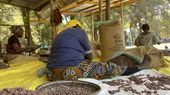
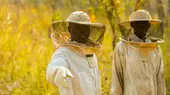
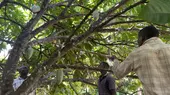
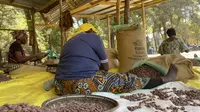
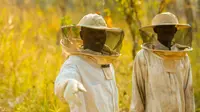
Upendo Honey shows another side of the model. Based in Kigoma, the company buys organic honey from more than 2,000 rural beekeepers , linking local incomes with forest protection. Beekeepers’ incomes have more than doubled, while 1.2 million hectares of at-risk forest are now generating economic value through honey production. This approach gives communities a direct financial incentive to protect the forest rather than clear it. Alongside it, Kokoa Kamili, an organic cocoa company, is strengthening the incomes of more than 7,600 cocoa farmers.
The first lessons are already becoming clear. “Smallholder farmers are the backbone of the industry, and reaching them can have a high social, economic and environmental impact,” recalls Andrea Inglin, at the Swiss Embassy in Tanzania. Her colleague, Daniela Kwayu, adds “Early signs of this financing mechanism show it can help companies attract additional private investment while strengthening their ability to deliver and scale climate resilience and adaptation impact.”
Scroll down to continue
Swipe to continue
Swipe to continue